Third wave coffee is a movement that treats coffee as an artisan product, like wine, with emphasis on single-origin beans, light-to-medium roasts, transparency and careful brewing. The term is generally credited to roaster Trish Rothgeb, who used it in an early-2000s newsletter for the Roasters Guild. It’s the cultural cousin of specialty coffee, which describes quality, while third wave describes a style of business and culture.
The three waves
| Wave | What defined it | Typical example |
|---|---|---|
| First | Coffee as a convenient commodity: canned, ground, mass-market | Diner and supermarket coffee |
| Second | Origin and café culture, espresso drinks entering the mainstream | Chains that popularized lattes and cappuccinos |
| Third | Traceability, craft roasting, and brewing as a skill | Micro-roasters and specialty cafés |
According to Wikipedia’s summary, the first wave generally did not distinguish by origin or beverage type, while the second wave introduced origin countries and espresso-based drinks to a wider audience (Wikipedia).
Who coined it?
The term is generally attributed to Trish Rothgeb (then Skeie), who wrote about it for The Flamekeeper, the newsletter of the Roasters Guild, drawing on what she saw among young baristas in Norway. Sources disagree on whether the piece ran in 2002 or 2003 (Sprudge, Boss Barista). Wikipedia notes that a 1999–2000 article in Tea & Coffee Asia had already used the phrase “Coffee’s Third Wave” (Wikipedia).
Rothgeb has said she didn’t intend the term as industry shorthand; she meant it as a way to help consumers understand what was changing in coffee (Boss Barista).
What third wave coffee looks like in practice
- Transparent sourcing: the bag names the country, region, farm or cooperative.
- Lighter roasts that preserve origin character (see Light vs. Medium vs. Dark Roast).
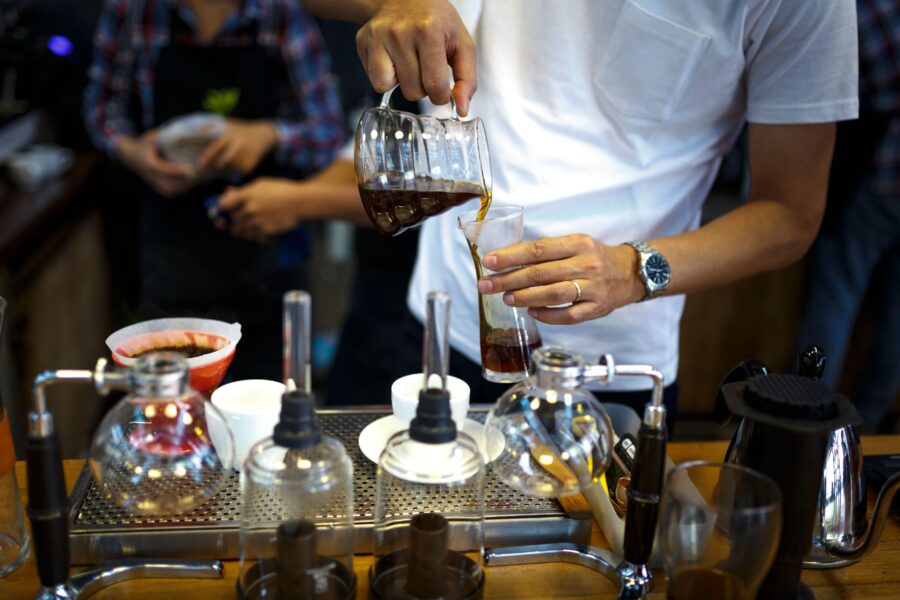
- Manual brewing such as V60 and AeroPress (home brewing guide).
- Direct or relationship trade with producers.
- Educated baristas and a café as a place to taste, not just to grab caffeine.
The “Big Three” and the industry’s response
Wikipedia lists Intelligentsia Coffee & Tea (Chicago), Stumptown Coffee Roasters (Portland) and Counter Culture Coffee (Durham) as the “Big Three” of North American third wave roasting. Intelligentsia and Stumptown were later acquired by Peet’s Coffee & Tea in 2015 (Wikipedia). Since then, large companies have borrowed third wave language, which has blurred the line between craft and marketing.
Fourth wave? Debate and criticism
Some writers talk about a “fourth wave,” usually meaning science-driven brewing, sustainability or tech. Critics argue that wave labels are marketing shorthand and that “fourth wave” mostly exists to sound new (Boss Barista). Jonathan Gold and others have also criticized third wave culture as precious, which prompted Rothgeb’s public response (Sprudge).
Third wave vs. specialty: the short version
- Specialty coffee = a quality benchmark (80+ points, traceable, low defects).
- Third wave = a cultural and business approach that elevates specialty coffee.
- You can have specialty coffee without a third wave café, and a third wave aesthetic without exceptional coffee.
Frequently asked questions
Is Starbucks third wave?
It’s usually cited as a second wave brand because it popularized espresso drinks and origin names at mass scale.
Does third wave always mean light roast?
It’s a common tendency, not a rule.
Who invented specialty coffee?
Erna Knutsen coined “specialty coffee” in 1974, decades before third wave (SCA).
Is third wave coffee more expensive?
Often, because of small lots, higher green costs and labor. See Is Specialty Coffee Worth the Price?.
What is third wave specialty coffee?
It is specialty coffee served and sold in the third wave style: traceable origins, craft roasting, careful brewing and a café culture that treats coffee like wine. Specialty describes the quality; third wave describes the approach.
Sources
- Wikipedia – Third-wave coffee
- Sprudge – Trish Rothgeb Writes a Letter to Sunset Magazine
- Boss Barista – The Fourth Wave of Coffee Is Not Coming
- SCA – Celebrating Erna Knutsen’s Specialty Coffee
Some links on this site may be affiliate links. We label them, and they never change what we recommend. Editorial policy
keep reading
What Is Specialty Coffee? The Complete Guide to the 80-Point Standard
Specialty coffee is high-quality coffee scoring 80+ points, traceable from farm to cup. Learn the SCA definition, how it's scored and how to spot it.
Specialty Coffee Association (SCA): What It Is and Why It Matters
The SCA sets the standards behind specialty coffee: cupping, the Golden Cup, certified brewers, Q Graders and how SCAP and BSCA use or adapt its grading.
SCAA vs. SCA: What Happened to the Specialty Coffee Association of America?
SCAA became the SCA in 2017 after merging with its European counterpart. See the timeline, what changed, and which old SCAA terms still matter today.